

On Unshatter Film Soundtrack (Live in São Paulo), Linkin Park bring old favourites and the From Zero era into the same set. I loved the energy—and the room it leaves for everything these songs still mean.
IN THIS ARTICLE
I loved Unshatter Film Soundtrack (Live in São Paulo). I love the old songs, I love what Emily Armstrong brings to them, and I love hearing her and Mike Shinoda take on the From Zero material together. There is a lot of history attached to this band. There is also the fairly irresistible urge to turn the volume up.
You can hear that appeal in the shape of the set: the impatient drive of “Faint,” the gradual lift of “Waiting for the End,” the recognition that comes with the piano figure of “In the End.” These songs still have a grip. The soundtrack gives them another performance to live in, and gives the newer songs a place among them.
Released on September 25, 2026, the album accompanies Linkin Park: Unshatter and draws on the band’s November 2024 From Zero album-release show in São Paulo. The digital edition contains 20 tracks, including its introductions and interludes, and runs for about 65 minutes. This review focuses on that soundtrack.

THE RECORD
Artist: Linkin Park
Album: Unshatter Film Soundtrack (Live in São Paulo)
Released: September 25, 2026
Format: Live film soundtrack · 20-track digital edition
Running time: Approximately 65 minutes
Label: Warner Records
Recording: São Paulo, Brazil · November 2024
Listen on Apple Music · Listen on Spotify
A review of the soundtrack; album artwork courtesy of Linkin Park / Warner Records.
Old favourites, new company
The sequence is one of its strengths. “Somewhere I Belong” sits beside “The Emptiness Machine”; “The Catalyst” and “Waiting for the End” lead into the much more confrontational “Casualty” and “Two Faced.” Different periods of the band’s writing are close enough to rub against each other.
That is part of what I enjoy about a live album. Songs leave the particular atmosphere of their studio records and acquire new neighbours. Here, the melodic pull of the older material helps the From Zero songs settle into the set. The newer material, in turn, interrupts the easy habit of knowing exactly what comes next.
“Leave Out All the Rest” asks for a different kind of attention from “Papercut.” “Over Each Other” brings its tangled relationship into a stretch that also includes “Numb” and “In the End.” I like that range. A set can be heavy and still leave room for tenderness.
Armstrong and Shinoda, in their own voices
Armstrong is a large part of why I loved this. Her voice has an abrasive edge that suits the band’s heavier writing, and there is a vulnerability in the melodic singing that gives the force somewhere to go. The attraction is in that combination. I want the roughness and the feeling.
On “The Emptiness Machine,” the shift between Shinoda’s measured delivery and Armstrong’s more forceful presence is built into the song. Their differences give it movement. Shinoda’s rhythmic precision also matters when the set reaches older material: in “Faint” and “Papercut,” the exchange between vocal approaches is part of what makes the songs so compelling.
A familiar melody carries years of association; a different voice changes the encounter. Armstrong’s grain and phrasing give me something new to attend to in music I already love. I enjoy hearing her make decisions within those songs, rather than spending the entire performance measuring the distance between her voice and Chester Bennington’s.
And the newer material gives her a place to be heard on her own terms. “Casualty” and “Over Each Other” make very different demands of a singer. Having both in the set helps show how much more there is to this partnership than the ability to deliver a heavy chorus.
Where the set hits hardest
“Somewhere I Belong”
After “Inception/Intro,” this is an effective way into the set. The song’s search for a place to belong has always helped make it communal: a private uncertainty becomes something people can recognise together. It also establishes an early connection with the band’s history before “The Emptiness Machine” brings the newer material into view.
“Waiting for the End”
There is something especially affecting about its place here. The song’s gradual lift and overlapping vocal ideas have always given uncertainty a sense of motion. In the context of this band returning to the stage, that movement takes on an additional association for me. The song is still spacious enough to carry whatever a listener brings to it.
“The Emptiness Machine” and “Two Faced”
These songs give Armstrong and Shinoda material written for their partnership. “The Emptiness Machine” offers a clear melodic entrance; “Two Faced” pushes towards the band’s more abrasive instincts. Together, they help make the newer era a substantial part of the experience. I enjoy hearing them among the older songs.
“Numb,” “In the End,” and “Faint”
This run concentrates three very different kinds of familiarity. “Numb” has its exposed melodic appeal, “In the End” its instantly recognisable piano figure and vocal exchange, and “Faint” its impatient forward drive. Hearing them together brings the songwriting into focus: each reaches a large audience through a distinct musical idea.
“Papercut,” “Heavy Is the Crown,” and “Bleed It Out”
The closing stretch keeps the emphasis on momentum. Putting “Heavy Is the Crown” between two established songs gives it a demanding place in the set, and its tightly wound aggression makes sense there. “Bleed It Out” supplies the final release. It is a satisfying way to leave a soundtrack whose energy is so much of its appeal.
Bennington is part of how I hear it
I will always love Bennington. His voice is part of my relationship with these songs, and hearing them sung by someone else can still be bittersweet. That response has room to exist alongside how much I enjoy Armstrong. I do not experience the two feelings as an argument I need to settle.
“Lost” and “Leave Out All the Rest” bring that feeling close. I have written before about what it means to hear Bennington on “Lost”, and my affection for that recording is still there. So is my excitement about hearing Armstrong and Shinoda together. Following this band now involves both.
Why I loved Unshatter
The soundtrack gives me enough familiar material to bring the band’s history close, and enough From Zero material to enjoy what the current line-up can do together. There is pleasure in that mixture. The quieter feelings have a place within a set that can still be wonderfully loud.
As a film soundtrack built around selected performances, it offers a particular route through the catalogue. I would listen in sequence first. The movement from “Waiting for the End” to “Casualty,” or from “Over Each Other” into “Numb,” is part of what makes this album worth hearing beyond a handful of individual tracks.
When “Bleed It Out” ends, I want to go back to “Somewhere I Belong” and hear the set start moving again.
Start with: “Somewhere I Belong,” “Waiting for the End,” “The Emptiness Machine,” and “Faint.” Then give the complete soundtrack a listen in order.
Listen to the soundtrack
Hear the complete Unshatter Film Soundtrack (Live in São Paulo) on Spotify or Apple Music. The official “Faint” soundtrack recording is embedded below.
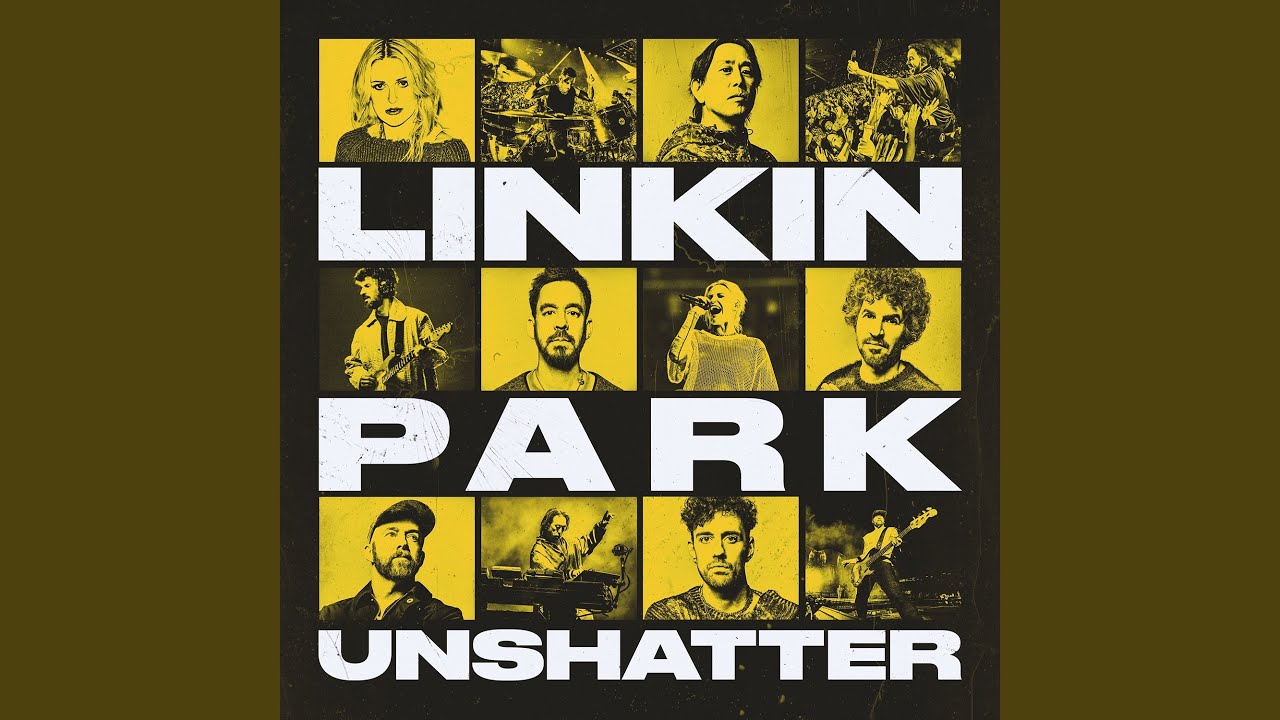
Listen to “Faint” from the soundtrack on Linkin Park’s official YouTube channel.
Sources and further reading
- Linkin Park official store: soundtrack description and complete CD track list.
- Apple Music: release date, digital edition, running time, and official cover.
- Unshatter: official film and soundtrack information.
- Linkin Park / Warner Records: official “Faint” soundtrack recording and performance credits.
READ NEXT
From Zero by Linkin Park: A Bold Reinvention of Sound and Legacy
A closer look at the studio album that introduced Armstrong and Shinoda’s vocal partnership.
Linkin Park’s “Lost”: What It Means to Hear Bennington Again
Bennington’s enduring voice, the recovered recording, and the bittersweet experience of loving this band’s past and present.
